
Especialidades quirúrgicas

Acerca de
.png)
Condiciones
Especialidades quirúrgicas
.png)
.jpg)

Pain that travels from your neck or back into your arm or leg can be difficult to ignore. What may begin as occasional discomfort can become a persistent problem, making it harder to work, exercise, sleep, or enjoy everyday activities. When a spinal nerve is being compressed, understanding what is causing that pressure can be the first step toward finding relief.
Foraminal stenosis is one condition that can cause radiating pain, numbness, tingling, or weakness. It occurs when one of the openings through which spinal nerves leave the spinal column becomes narrower. Depending on where the narrowing occurs, symptoms may affect the neck, shoulders, arms, lower back, hips, legs, or feet.
A diagnosis of foraminal stenosis does not automatically mean surgery is necessary. Many people can manage their symptoms with nonsurgical treatments such as physical therapy, medications, activity modification, and targeted injections. The right approach depends on the severity of the narrowing, the symptoms it produces, and whether a nerve is being significantly compressed.
If persistent pain, numbness, or weakness is interfering with your life, Dr. Mangino can help determine whether foraminal stenosis may be contributing to your symptoms and guide you toward an appropriate treatment plan.
What Is Foraminal Stenosis?
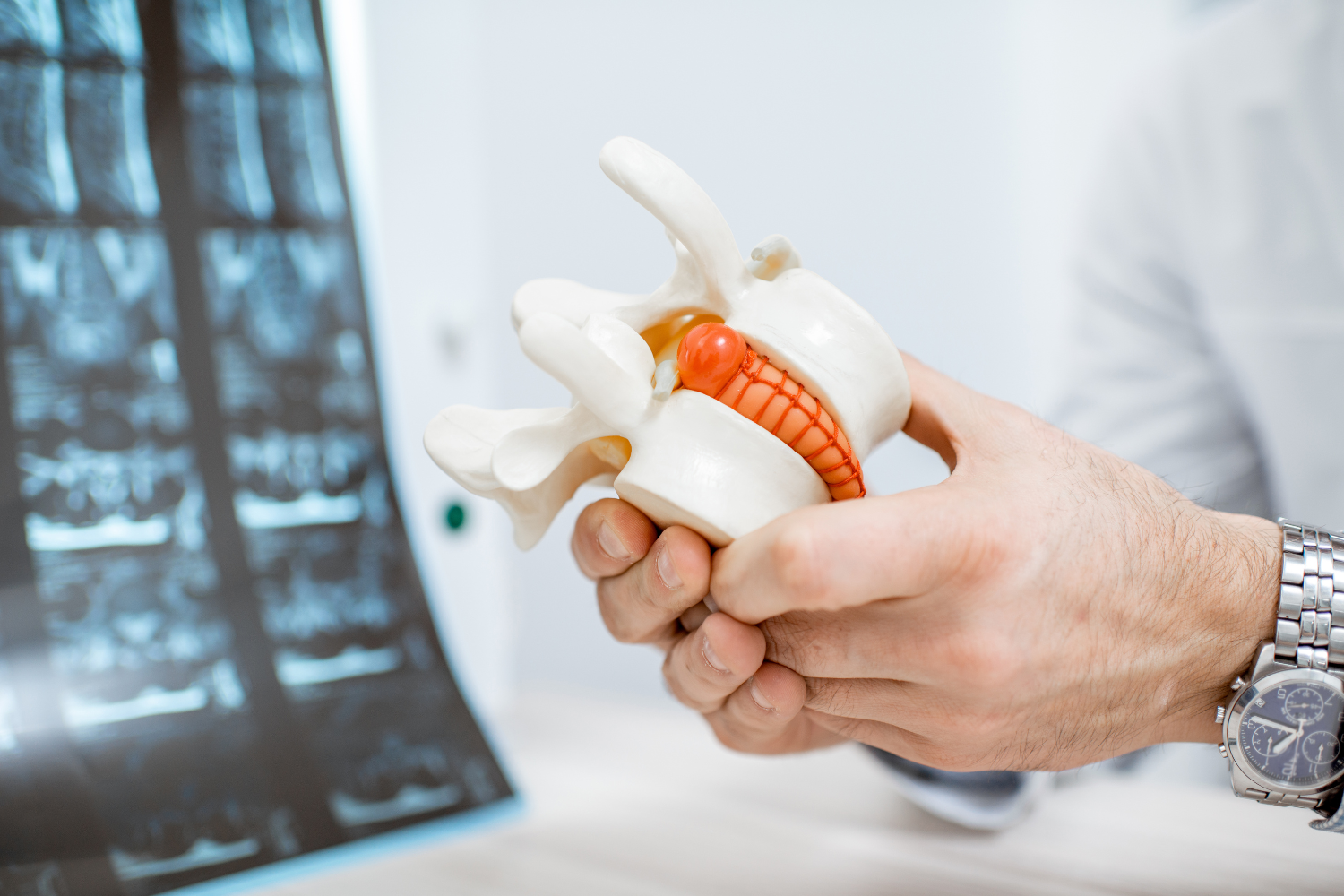
Foraminal stenosis occurs when the openings between the bones of the spine become narrowed. These openings are called neural foramina, and they provide pathways for spinal nerves to leave the spinal canal and travel to other parts of the body.
A healthy neural foramen provides enough space for the nerve to pass without excessive pressure. When surrounding structures become enlarged or the space becomes smaller, the nerve may become irritated or compressed.
Foraminal stenosis can develop in different areas of the spine. Cervical foraminal stenosis affects the neck, thoracic foraminal stenosis affects the middle back, and lumbar foraminal stenosis affects the lower back.
The symptoms depend largely on which nerve is affected. For example, narrowing in the cervical spine may produce pain, tingling, or weakness in an arm or hand, while narrowing in the lumbar spine may cause symptoms that travel into the buttock or leg.
Why Do Spinal Nerves Become Compressed?
Foraminal stenosis usually develops because of changes that gradually reduce the amount of available space around a spinal nerve. These changes can be related to aging, injury, or degenerative conditions affecting the spine.
Age Related Spinal Changes
As we age, the discs between the vertebrae can lose water and become thinner. This process can reduce the height of the space between vertebrae and contribute to narrowing around the neural foramen.
The joints of the spine can also develop arthritis. As these joints change, additional bone may form in the form of bone spurs. These growths can extend into the neural foramen and reduce the space available for a nerve.
Herniated or Bulging Discs
A herniated disc can also contribute to foraminal narrowing. When disc material extends beyond its normal boundaries, it may occupy space near a spinal nerve.
Depending on the location and size of the disc problem, it can directly irritate or compress the nerve, potentially producing symptoms such as radiating pain, numbness, tingling, or weakness.
Thickened Ligaments
Ligaments help stabilize the spine, but they can become thicker and less flexible over time. In some cases, thickened spinal ligaments contribute to narrowing around the nerves.
Previous Injuries
A previous spinal injury can change the structure of the spine and contribute to narrowing. Fractures, dislocations, or other injuries may alter the alignment of the vertebrae or contribute to degenerative changes later in life.
Spinal Alignment Problems
Certain conditions that affect spinal alignment can also reduce the space available for nerves. Depending on the location and severity, conditions such as scoliosis or vertebral slippage may contribute to foraminal stenosis.
Foraminal Stenosis Symptoms
Some people have foraminal stenosis without experiencing any symptoms. Narrowing becomes clinically important when it irritates or compresses a spinal nerve.
Radiating Pain
One of the most characteristic symptoms is radiating nerve pain. Instead of remaining in one location, pain may travel along the path of the affected nerve.
Cervical foraminal stenosis may cause pain that moves from the neck into the shoulder, arm, or hand. Lumbar foraminal stenosis may cause pain that travels from the lower back or buttock into the thigh, calf, or foot.
This type of pain can feel sharp, burning, electric, or shooting. Some people experience discomfort continuously, while others notice symptoms during specific movements or positions.
Numbness and Tingling
Nerve compression can interfere with normal nerve signaling, resulting in numbness or tingling. You may notice a sensation similar to pins and needles in the arm, hand, leg, or foot.
The exact location of numbness can provide useful information about which nerve may be affected.
Muscle Weakness
More significant nerve compression can cause muscle weakness. Depending on the affected nerve, this could lead to difficulty lifting the arm, gripping an object, walking normally, raising the foot, or performing other movements.
Weakness should not be ignored, particularly when it is new or getting worse. It can indicate that the nerve is experiencing more significant dysfunction.
Symptoms That Change With Position
Some people notice that symptoms become worse when the spine is placed in certain positions. Activities that extend, rotate, or load the spine may increase pressure around a narrowed foramen.
However, symptoms vary considerably from one person to another. A thorough evaluation is necessary to determine whether foraminal stenosis is actually responsible for the discomfort.
How Is Foraminal Stenosis Diagnosed?
Diagnosis begins with a discussion about your symptoms and medical history. Your healthcare provider may ask where your pain begins, where it travels, whether you experience numbness or weakness, and what activities or positions affect your symptoms.
A physical examination can help identify signs of nerve irritation. Your provider may assess strength, sensation, reflexes, walking ability, range of motion, and other neurological functions.
Because several conditions can cause similar symptoms, imaging may be necessary to understand what is happening inside the spine.
X Rays
X rays can provide information about the bones and alignment of the spine. They may show arthritis, bone spurs, narrowing between vertebrae, or other structural changes.
X rays do not show nerves as clearly as an MRI, so they are generally only one part of the diagnostic process.
MRI
An MRI is often particularly useful for evaluating foraminal stenosis because it can show discs, nerves, ligaments, and other soft tissues.
MRI findings can help identify whether a nerve is being compressed and whether the narrowing is caused by a disc problem, bone spur, arthritis, or another structural change.
Importantly, an MRI should not be interpreted in isolation. Spinal narrowing can be present in people who have no symptoms. The imaging findings need to be considered alongside the patient's symptoms and physical examination.
CT Scans
A CT scan can provide detailed images of the bones and may be useful when evaluating bone spurs, arthritis, or other bony abnormalities. In certain circumstances, a CT myelogram may be used when additional information about the spinal canal and nerves is needed.
Foraminal Stenosis Treatment Options
Treatment depends on the severity of symptoms, the underlying cause, and whether there is significant nerve dysfunction. Most treatment plans begin with nonsurgical care.
The goal is to reduce pain, improve function, and address the factors contributing to symptoms while monitoring for signs that more advanced treatment may be necessary.
Physical Therapy
Physical therapy can play an important role in treating foraminal stenosis. A customized program may focus on improving flexibility, strengthening supportive muscles, improving posture, and reducing stress on the affected portion of the spine.
Exercises may vary depending on whether the stenosis affects the cervical or lumbar spine. A physical therapist can help determine which movements are appropriate for your condition.
Medication
Depending on your medical history and symptoms, medications may be used to manage pain and inflammation. Over the counter medications may help some patients, while others may require prescription treatment.
Because medications can have side effects and may interact with other drugs or medical conditions, they should be used according to guidance from an appropriate healthcare professional.
Activity Modification
Certain activities may aggravate nerve compression. Temporarily modifying movements that consistently increase symptoms can allow irritated tissues to settle while you work on improving strength and mobility.
This does not necessarily mean avoiding physical activity altogether. In many cases, maintaining appropriate movement is beneficial. The goal is to find activities that support recovery without repeatedly aggravating symptoms.
Epidural Steroid Injections
In selected patients, an epidural steroid injection may help reduce inflammation around an irritated spinal nerve. These injections may provide temporary symptom relief and can sometimes make it easier to participate in physical therapy.
Injections do not necessarily correct the underlying narrowing. Their role is generally to manage symptoms while the broader treatment plan addresses function and the underlying condition.
When Is Surgery Considered for Foraminal Stenosis?
Many people improve with conservative treatment, but surgery may be considered when symptoms remain severe or when neurological problems develop.
A surgical evaluation may be appropriate when persistent nerve pain does not improve with nonsurgical treatment, when weakness is progressing, or when imaging demonstrates significant nerve compression that corresponds with the patient's symptoms.
The decision is not based on an MRI finding alone. A specialist will consider your symptoms, neurological examination, imaging, overall health, and response to previous treatments.
Progressive Weakness Requires Attention
Pain can be frustrating, but weakness can be more concerning because it may indicate impaired nerve function. New or worsening weakness should be medically evaluated rather than managed indefinitely at home.
Similarly, symptoms involving significant changes in walking, coordination, or other neurological functions warrant prompt evaluation.
What Happens During Foraminal Stenosis Surgery?
The specific procedure depends on where the stenosis occurs and what is compressing the nerve. The primary goal is generally to create more space for the affected nerve.
Un cirujano puede extraer una parte del hueso u otro tejido que esté contribuyendo a la compresión. En algunos casos, pueden ser necesarios procedimientos adicionales para estabilizar la columna vertebral.
La operación adecuada depende de la anatomía de la estenosis, el número de niveles afectados, la estabilidad de la columna y otros factores individuales. Un especialista en columna puede explicarle los posibles beneficios, riesgos y alternativas tras revisar las imágenes y los resultados de los exámenes pertinentes.
¿Puede mejorar la estenosis foraminal sin cirugía?
Sí. Muchas personas con estenosis foraminal pueden controlar sus síntomas con éxito sin necesidad de cirugía, especialmente cuando no existe un déficit neurológico progresivo.
La gravedad del estrechamiento observado en las pruebas de imagen no siempre predice la gravedad de los síntomas. Alguien puede tener un estrechamiento importante pero sentir pocas molestias, mientras que otra persona con un estrechamiento menor puede experimentar un dolor nervioso.
Por eso el tratamiento debe centrarse en el cuadro clínico completo, y no solo en el informe de las pruebas de imagen.
¿Cuándo debería consultar a un especialista en columna?
Si el dolor, el entumecimiento, el hormigueo o la debilidad persisten a pesar del tratamiento conservador, un especialista en columna puede ayudar a determinar si la estenosis foraminal está contribuyendo a sus síntomas.
Una evaluación especializada también puede ser adecuada cuando los síntomas interfieren con el trabajo, el sueño, el ejercicio o las actividades cotidianas, o cuando las pruebas de imagen ya han identificado un estrechamiento significativo.
Busque atención médica inmediata ante debilidad progresiva, dificultad importante para caminar, cambios importantes en la coordinación u otros síntomas neurológicos que empeoren rápidamente. Una evaluación temprana puede ayudar a determinar si un nervio está en riesgo y si es necesario un tratamiento adicional.
Preguntas frecuentes sobre la estenosis foraminal
¿Es grave la estenosis foraminal?
La estenosis foraminal puede variar desde un estrechamiento leve que no causa síntomas hasta una compresión nerviosa importante que produce dolor intenso, entumecimiento o debilidad. La gravedad depende del grado de compresión y de los síntomas que provoque. Los síntomas neurológicos progresivos requieren una evaluación médica inmediata.
¿Cómo se siente el dolor de la estenosis foraminal?
La estenosis foraminal puede causar un dolor agudo, ardiente, punzante o eléctrico que se desplaza a lo largo del recorrido del nervio afectado. La estenosis cervical puede producir síntomas en el hombro, el brazo o la mano, mientras que la estenosis lumbar puede causar síntomas en los glúteos, la pierna o el pie.
¿Puede la estenosis foraminal causar entumecimiento y debilidad?
Sí. Cuando un nervio espinal está comprimido, las señales nerviosas normales pueden verse interrumpidas. Esto puede causar entumecimiento, hormigueo o debilidad muscular en las áreas irrigadas por el nervio afectado. La debilidad persistente o que empeora debe ser evaluada por un profesional de la salud.
¿Se puede tratar la estenosis foraminal sin cirugía?
Sí. El tratamiento a menudo comienza con opciones no quirúrgicas como fisioterapia, modificación de actividades, medicamentos e inyecciones específicas. La cirugía puede considerarse cuando los síntomas siguen siendo graves a pesar del tratamiento conservador o cuando se desarrollan problemas neurológicos significativos.
¿La estenosis foraminal siempre requiere cirugía?
No. Un informe de diagnóstico por imagen que muestre un estrechamiento foraminal no significa automáticamente que sea necesaria una cirugía. Muchas personas tienen estrechamiento espinal sin síntomas significativos. La cirugía generalmente se considera cuando los síntomas y los hallazgos del examen indican una compresión nerviosa importante y el tratamiento conservador no ha proporcionado un alivio adecuado, o cuando los déficits neurológicos están progresando.
El enfoque correcto conduce a una mejor funcionalidad
El dolor irradiado persistente, el entumecimiento o la debilidad pueden hacer que se pregunte si el problema mejorará alguna vez. La estenosis foraminal puede ser la responsable de estos síntomas, pero identificar la fuente exacta de la compresión nerviosa es esencial antes de decidir el tratamiento.
El enfoque correcto puede ser tan sencillo como fisioterapia y cambios en la actividad, o puede requerir una evaluación más detallada cuando los síntomas persisten. Comprender lo que muestran sus imágenes y cómo se relaciona con sus síntomas puede ayudarle a tomar una decisión más informada sobre su atención.
El Dr. Mangino puede ayudarle a comprender si la estenosis foraminal está contribuyendo a sus síntomas y qué opciones de tratamiento pueden ser adecuadas para su situación. Si el dolor nervioso persistente, el entumecimiento o la debilidad están limitando su vida diaria, considere programar una evaluación para dar el siguiente paso hacia el alivio y una mejor funcionalidad.


