

.png)
.png)
.jpg)

Back or neck pain can make even simple movements feel uncertain. Getting out of bed, sitting at a desk, bending down, or turning your head can suddenly become uncomfortable, especially when pain starts traveling into an arm or leg.
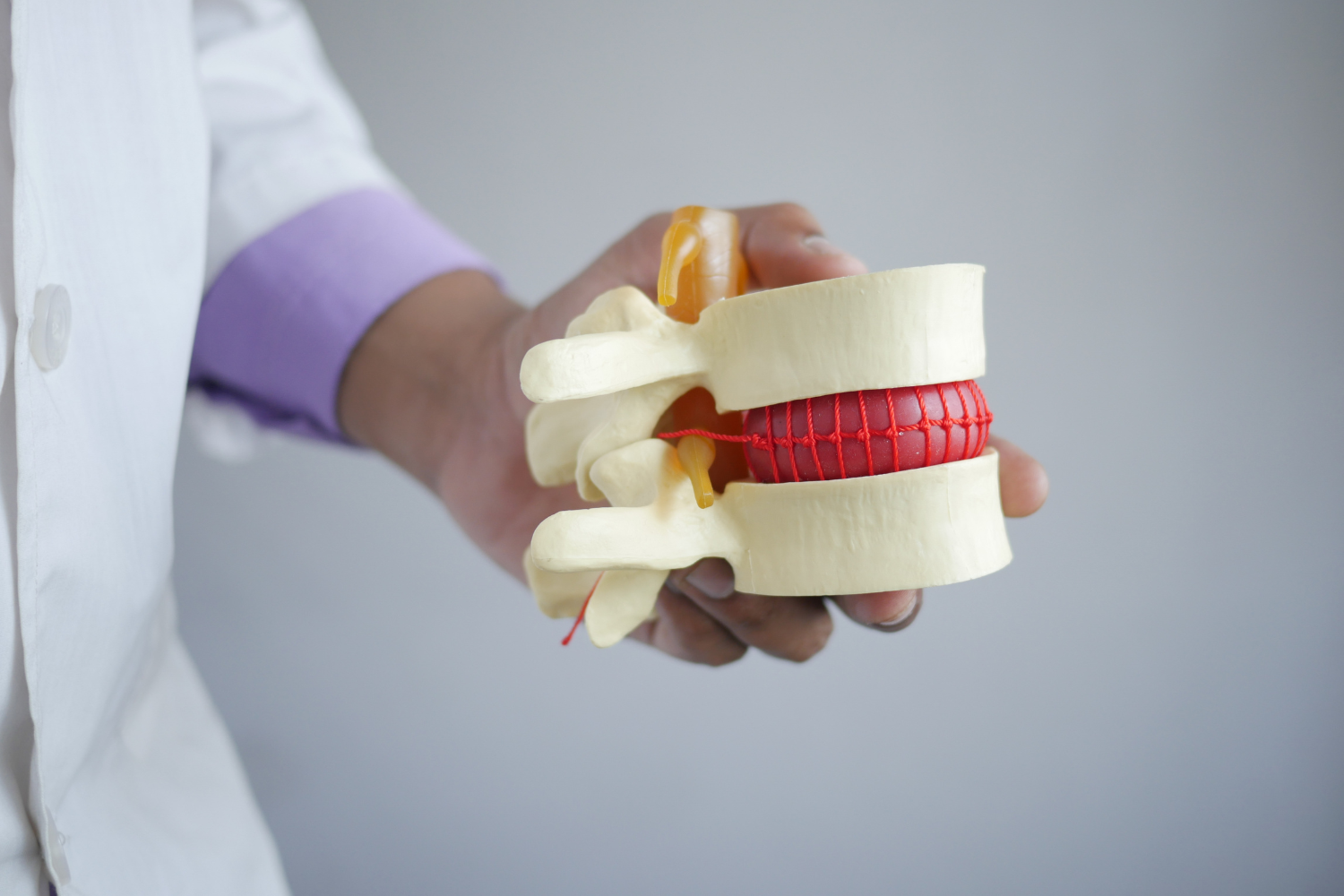
A bulging disc may be one possible explanation. Spinal discs sit between the vertebrae and help absorb forces while allowing the spine to move. As discs change with age or stress, their outer portion can extend beyond its usual boundaries.
The important thing to understand is that a bulging disc does not always cause pain. Many people have disc bulges visible on imaging without experiencing any symptoms. Problems can occur when the bulge irritates or compresses a nearby spinal nerve.
If persistent pain, numbness, tingling, or weakness is affecting your daily life, Dr. Mangino can help determine whether a bulging disc may be contributing to your symptoms and whether further evaluation or treatment is appropriate. Knowing what a disc bulge means can help you make informed decisions about your spine health.
What Is a Bulging Disc?
A bulging disc occurs when one of the discs between the vertebrae extends beyond its normal boundary. The disc itself is made of a strong outer layer called the annulus fibrosus and a softer inner material called the nucleus pulposus.
Healthy discs provide cushioning between the vertebrae. They also help distribute forces created when you walk, bend, lift, or move.
With a disc bulge, the outer portion of the disc extends outward, often around a relatively broad area of its circumference. The disc may still remain intact.
A bulging disc can occur in the cervical spine, located in the neck, or the lumbar spine, located in the lower back. The location matters because symptoms depend on which nerves, if any, are affected.
Bulging Disc vs Herniated Disc
The terms bulging disc and herniated disc are sometimes used interchangeably, but they describe different types of disc changes.
With a bulging disc, the outer layer generally extends beyond its normal boundary while remaining intact. The bulge can involve a larger portion of the disc circumference.
A herniated disc occurs when a more localized portion of the disc extends through a weakness or tear in the outer layer. Disc herniation can take different forms depending on how far the inner disc material extends.
Both conditions can be present without symptoms. Both can also cause nerve compression when they reduce the space available for a spinal nerve.
An imaging report may use these terms to describe structural findings, but the words alone do not determine how serious the condition is. Symptoms and examination findings are equally important.
What Causes a Bulging Disc?
Several factors can contribute to disc bulging. Age related changes are among the most common causes, but injury, repetitive stress, and individual anatomy can also play a role.
Age Related Disc Changes
Spinal discs naturally change as we age. They can lose water and become less flexible, which can reduce their ability to absorb forces.
As the disc becomes less resilient, its outer layer may gradually extend outward. This is one reason disc bulges are common among older adults.
Repetitive Stress
Repeated bending, lifting, twisting, or other physically demanding activities can place stress on spinal discs.
This does not mean that normal exercise or movement causes disc problems. Instead, repetitive loading combined with existing disc degeneration, poor mechanics, or other factors may contribute to symptoms in some individuals.
Previous Injury
A sudden injury can damage a spinal disc or accelerate changes that were already developing. A lifting injury, fall, collision, or other trauma may trigger symptoms even when disc degeneration was already present.
Body Mechanics and Lifestyle Factors
Certain occupational demands, prolonged sitting, smoking, and excess body weight may contribute to spinal stress or disc degeneration.
However, disc problems rarely have one simple cause. A person's age, genetics, physical activity, previous injuries, and overall spinal health can all influence the development of disc changes.
Bulging Disc Symptoms
A bulging disc may cause no symptoms at all. This is important because imaging frequently identifies disc bulges in people who do not experience back or neck pain.
Symptoms develop when the disc bulge irritates nearby tissues or compresses a spinal nerve.
Back or Neck Pain
A disc bulge can contribute to localized pain in the lower back or neck. The discomfort may become more noticeable with certain movements or prolonged positions.
However, back or neck pain has many possible causes. A bulging disc seen on an MRI does not automatically mean it is responsible for the pain.
Radiating Pain
If a bulging disc presses against a spinal nerve, pain may travel away from the spine.
A cervical disc bulge may cause pain that extends into the shoulder, arm, or hand. A lumbar disc bulge may cause pain that travels into the buttock, thigh, calf, or foot.
This type of pain is sometimes described as nerve pain and may feel sharp, burning, shooting, or electric.
Numbness and Tingling
Nerve compression can affect sensation. You may experience numbness, tingling, pins and needles, or a burning sensation along the path of the affected nerve.
The location of these symptoms can help a healthcare professional determine which nerve may be involved.
Muscle Weakness
A more significant nerve compression can affect muscle function and cause weakness.
Depending on the affected nerve, you may notice difficulty gripping objects, lifting the arm, walking normally, or raising the foot.
New or worsening weakness should be medically evaluated, particularly when it develops alongside radiating pain or numbness.
Can a Bulging Disc Cause Sciatica?
Yes, a lumbar bulging disc can contribute to sciatica when it irritates or compresses nerves that form the sciatic nerve.
Sciatica typically produces pain that travels from the lower back or buttock into the leg. Numbness, tingling, or weakness can also occur.
However, not all sciatica is caused by a bulging disc. Other conditions can narrow the spaces around spinal nerves and produce similar symptoms.
A proper evaluation can help determine the source.
How Is a Bulging Disc Diagnosed?
Diagnosis begins with a medical history and physical examination.
Your healthcare provider may ask when symptoms began, whether they followed an injury, what movements make them better or worse, and whether you have experienced numbness, tingling, or weakness.
During the examination, your provider may assess strength, sensation, reflexes, range of motion, walking ability, and other neurological functions.
MRI
An MRI is commonly used to evaluate spinal discs and nerves. It can show the location and extent of a disc bulge and whether nearby structures are being compressed.
MRI can also identify other conditions that may contribute to symptoms.
However, an MRI finding should always be interpreted in context. Disc bulges are common, especially with increasing age, and may not be the source of someone's pain.
X Rays
X rays can show the bones and alignment of the spine, but they do not provide detailed images of spinal discs or nerves.
They may be used to evaluate other possible causes of pain or identify degenerative changes.
Nerve Testing
In selected situations, nerve conduction studies or electromyography may help determine whether a nerve is being affected and whether symptoms are coming from the spine or another location.
Bulging Disc Treatment Options
Treatment depends on the location of the bulging disc, severity of symptoms, duration of symptoms, and whether a nerve is being compressed.
For many patients, conservative treatment is the first approach.
Staying Active
Complete bed rest is generally not recommended for routine back pain. Maintaining appropriate movement can help prevent stiffness and deconditioning.
Activities that significantly increase pain may need to be modified temporarily. As symptoms improve, activity can usually be increased gradually.
Physical Therapy
Physical therapy can help improve strength, flexibility, posture, and movement mechanics.
A customized program may focus on the muscles supporting the spine and may include exercises designed to improve core stability and mobility.
Physical therapy does not physically push a disc back into place. Instead, it aims to improve function and reduce stress on irritated structures.
Medication
Depending on your health history, medications may help manage pain and inflammation.
Over the counter pain relievers or anti-inflammatory medications may be appropriate for some people. Others may require prescription medication for short term symptom management.
Because medications can have side effects and interact with other treatments, they should be used according to guidance from a healthcare professional.
Activity Modification
If specific activities repeatedly aggravate symptoms, temporarily changing how you perform them may help.
This can include adjusting lifting techniques, reducing prolonged sitting, taking movement breaks, or modifying exercise until symptoms improve.
The objective is to remain active while avoiding movements that repeatedly provoke significant symptoms.
Injections
For some patients with persistent nerve related pain, a healthcare professional may consider an epidural steroid injection.
The medication is delivered near the irritated nerve with the goal of reducing inflammation and pain. An injection may provide temporary relief and can sometimes make it easier to participate in physical therapy.
Injections do not permanently eliminate the underlying disc bulge.
Can a Bulging Disc Heal on Its Own?
Many people with symptomatic disc problems improve over time without surgery. Symptoms can decrease as inflammation settles and the irritated nerve becomes less sensitive.
Some disc herniations can also shrink over time. A disc bulge, however, may remain visible on imaging even after symptoms improve.
This is an important distinction. The goal of treatment is not necessarily to make an MRI look normal. The priority is to reduce symptoms, restore function, and protect neurological health.
When Should You See a Spine Specialist?
Many cases can initially be managed by a primary care provider, physical therapist, or other qualified healthcare professional. A spine specialist may become appropriate when symptoms persist, worsen, or significantly interfere with daily activities.
An evaluation may be particularly important when radiating pain continues despite conservative treatment or when numbness and weakness develop.
A specialist can review imaging, perform a neurological examination, and determine whether the disc bulge is actually responsible for the symptoms.
Persistent Nerve Pain
Pain that continues to travel into an arm or leg despite appropriate conservative treatment may indicate ongoing nerve irritation.
A spine specialist can determine whether additional treatment, diagnostic testing, or an alternative diagnosis should be considered.
Progressive Weakness
Progressive muscle weakness is an important warning sign. Nerve compression that causes worsening weakness may require more timely evaluation to reduce the risk of lasting nerve dysfunction.
Severe or Rapidly Worsening Symptoms
Sudden severe symptoms or rapidly worsening neurological problems should be evaluated promptly.
When Is Surgery Considered for a Bulging Disc?
Most people with disc related symptoms do not require surgery. Surgical treatment may be considered when significant nerve compression causes persistent symptoms that have not responded adequately to conservative care.
Surgery may also be considered when neurological deficits, particularly progressive weakness, are present.
The specific procedure depends on the location and cause of nerve compression. In selected cases, surgery may involve removing disc material or other tissue that is pressing on a nerve.
The decision should be individualized. An abnormal MRI alone is not usually enough to justify surgery. Symptoms, physical examination findings, imaging, and response to conservative treatment all matter.
Emergency Warning Signs
Although most disc problems are not emergencies, certain symptoms require immediate medical attention.
New loss of bladder or bowel control, numbness around the inner thighs or genital region, severe or rapidly progressing weakness, or significant difficulty walking can indicate serious nerve compression.
These symptoms should not be managed at home while waiting for routine follow up. Seek urgent medical evaluation if they occur.
Can a Bulging Disc Be Prevented?
There is no guaranteed way to prevent every disc bulge, especially because age related disc changes are common.
However, maintaining a healthy level of physical activity, strengthening the muscles that support the spine, using appropriate lifting techniques, avoiding smoking, and maintaining a healthy body weight may support overall spinal health.
If your work involves frequent lifting, bending, or prolonged sitting, ergonomic adjustments and regular movement breaks may also help reduce unnecessary strain.
Frequently Asked Questions About Bulging Discs
Is a bulging disc serious?
A bulging disc is not necessarily serious. Many people have disc bulges without symptoms. It becomes more concerning when the bulge compresses a spinal nerve and causes persistent pain, numbness, or weakness.
What is the difference between a bulging disc and a herniated disc?
A bulging disc generally involves a broader extension of the disc's outer layer while the disc remains intact. A herniated disc involves a more localized displacement through a weakness or tear in the outer disc layer. Both can occur without symptoms or cause nerve compression.
Can a bulging disc heal without surgery?
Yes. Many people improve with conservative treatment, including appropriate activity, physical therapy, medication, and time. Symptoms can improve even when the disc bulge remains visible on imaging.
Can a bulging disc cause numbness and weakness?
Yes. If the bulge compresses a spinal nerve, it can cause numbness, tingling, pain, or weakness in the area supplied by that nerve. Worsening weakness should be evaluated promptly.
Does every bulging disc require an MRI?
No. Imaging is not always necessary for uncomplicated back or neck pain. MRI may be recommended when symptoms persist, neurological symptoms develop, a serious condition is suspected, or treatment decisions require more detailed information.
When should I see a spine specialist for a bulging disc?
Consider specialist evaluation when symptoms persist despite conservative care, when radiating pain is severe or ongoing, or when numbness or weakness develops. Progressive neurological symptoms require more timely evaluation.
Evaluate your Symptoms With Dr. Mangino
Persistent back or neck pain can gradually change the way you move, work, sleep, and enjoy your life. When an MRI reveals a bulging disc, it can be tempting to assume that the imaging result explains everything. But the real question is whether the disc is actually causing your symptoms and what can be done to help you recover.
Many people improve without surgery through appropriate activity, physical therapy, medication, and other conservative treatments. When symptoms persist or neurological problems develop, a spine specialist can determine whether additional treatment is appropriate.
Dr. Mangino can help evaluate your symptoms, interpret your imaging in context, and determine the next step in your care. If persistent pain, numbness, tingling, or weakness is interfering with your life, getting an accurate evaluation can provide clarity and help you move forward.
Do not let a bulging disc diagnosis leave you uncertain about what comes next. Schedule an evaluation with Dr. Mangino and take a proactive step toward understanding your symptoms and protecting your spinal health.


